Entry · Ref XJXCLHWE
ADA Mobile Commode Rental Overview to Accessible Entrances and Landings
- Posted
- 2026-10-04
- Last amended
- 2026-10-04
- Account
- @garrettshxs110
When people imagine an ada mobile commode rental, they usually focus on the system itself, the wider door, the added interior space, the grab bars. Those functions issue, obviously. However in practice, a few of the most significant accessibility failures happen prior to an individual also reaches the threshold. A well-appointed ada mobile restroom can still be unusable if the approach is harsh, the entry is obstructed, or the touchdown before the door is as well limited to steer safely.
That space in between "we rented out the appropriate device" and "somebody can in fact use it separately" is where numerous event coordinators, property supervisors, and website organizers get floundered. I have seen this occur in settings that implied well and spent genuine money on compliance. The available system got here on time, it was plainly identified, and it looked right from a distance. Then the final positioning placed it on soft ground, behind a row of common systems, or at the end of an irregular path that a mobility device customer might not easily travel. Theoretically, an easily accessible toilet was present. In actual use, it was effectively out of reach.
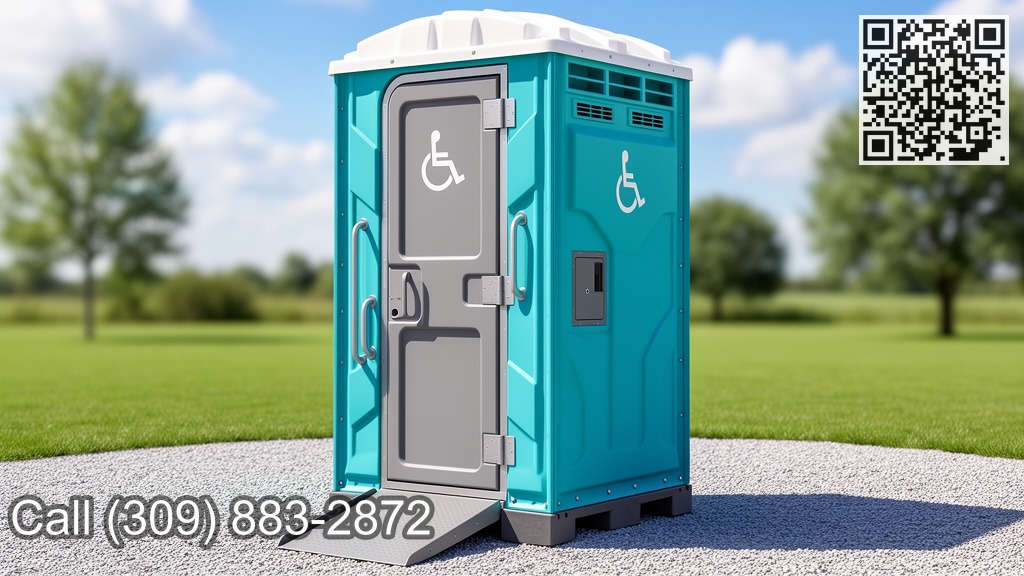
If you are setting up ada compliant portable restrooms, the entryway and landing should have the exact same interest as the rental order itself. The federal structure is clear concerning the huge factors. The managing criterion in the United States is the 2010 ADA Requirements for Accessible Layout. For mobile commode collections, at the very least 5 percent of the devices in each cluster have to come, and that scoping uses also at short-lived occasions. The obtainable system should be understood the International Sign of Ease Of Access. It additionally should have an obtainable path and entryway, and when ramps or landings are needed, those features need to meet the ADA technical demands. Past the strategy, the unit itself should please suitable toilet-room demands such as clearances, transforming area, door maneuvering clearances, and appropriate grab-bar and water-closet rules.
That sounds uncomplicated till you put it on the ground.
The entryway becomes part of the restroom
A common blunder is dealing with the portable device as a stand-alone things. In truth, availability starts prior to the door. If a visitor, worker, individual, viewer, or visitor can not take a trip the course to the restroom and position themselves at the entryway with enough space to open up and go through the door, the truth that the interior meets ada mobile toilet requirements does not address the problem.
This is specifically crucial since mobile washrooms are seldom established on perfect websites. They show up on yard fields, gravel lots, fairgrounds, momentary job areas, parking areas, and event areas that were never created as irreversible washroom areas. A site can look acceptable to an able-bodied individual and still produce actual barriers for someone utilizing a wheelchair, walker, walking cane, or other flexibility help. The limit area ends up being the stress factor. It is where turning, reaching, positioning, and unlocking all come together.
That is why the phrase ada obtainable mobile restroom ought to never be decreased to "bigger unit." Ease of access is a chain. The course, technique, entry, landing, door, interior clear room, and fixtures all depend on each other.
What the ADA structure in fact needs here
The most valuable way to think of conformity is to divide scoping from technological details.
Scoping tells you when accessible systems are required. For clusters of portable single-user toilet units, at least 5 percent of the devices in each collection need to come. If you have a short-lived occasion with mobile toilets organized with each other, that regulation still applies. Short-lived does not suggest optional.
Technical needs regulate just how the available device and its approach should function. The confirmed points that matter most for entries and landings are these:
- The unit must be on an obtainable route.
- The entrance should be accessible.
- Any needed ramps and touchdowns must adhere to ADA technical requirements.
- The device must consist of needed toilet-room functions such as turning space and door maneuvering clearances.
Those points sound wide due to the fact that they are. The ADA criteria have thorough technical policies, and the error I see frequently is assuming that a supplier's supply tag alone guarantees the whole installment is certified. A vendor can provide an ada compliant mobile toilet or ada-compliant portable toilet, however the final configuration still depends upon where and just how the system is placed.
That difference issues for responsibility and for user experience. The supplied product may be suitable. The installment might still fail.
The cluster guideline changes planning
The 5 percent policy for every cluster is easy to undervalue. Individuals sometimes count the total number of toilets across an entire site and think they can put the easily accessible units in one hassle-free location. That can produce long traveling ranges and effectively isolate access. The validated regulation is based on each cluster, not just the site-wide total.
Imagine a fairground with mobile toilets organized near the primary entrance, the food court, and the performance location. If those are separate clusters, ease of access has to be considered in each cluster. The functional factor is obvious once you consider exactly how people move via a site. A mobility device customer should not have to cross the entire premises to discover the one available unit that was put somewhere else simply due to the fact that the total matter worked out on paper.
This is where ada certified mobile toilets preparing comes to be greater than arithmetic. It becomes circulation preparation. You are not only giving a certified number of systems. You are making sure the easily accessible ones are usable where people really are.
Why touchdowns make or damage usability
The word "touchdown" can seem technological or minor, yet it is main to a successful installment. At a mobile bathroom entry, the touchdown is the useful hosting area that lets a customer quit, place their wheelchair gadget, operate the door, and get in without battling the terrain or shedding balance.
A bad landing typically fails in one of a few familiar ways. It may be as well uneven. It may be obstructed by neighboring units, fence, stakes, cables, or trash receptacles. It might end suddenly right into mud or loosened rock. Or the door might turn into an area that does not allow appropriate maneuvering. These are area troubles, not abstract design concerns, and they are exactly the kind of details people remember after an event. No one applauds a mobile toilet setup for meeting a requirement they never ever had to think about. They do bear in mind having a hard time to obtain inside.
That is why I advise clients to evaluate the entrance area from the viewpoint of real motion. Approach the device. Quit at the door. Visualize reaching, turning, and pulling or pressing while remaining steady. After that ask a more difficult concern: would certainly this still work after several hours of foot website traffic, after rainfall, or after the ground softens? Availability that disappears when problems transform was never reliable to begin with.
An obtainable path is not simply a path that exists
Sites frequently claim an accessible course due to the fact that there is some method to get there. That is insufficient. The course has to sustain gain access to in an actual, reputable sense.
For mobile bathroom positioning, the path deserves very early attention, before the vehicle unloads the units. Once they are set, teams are often reluctant to relocate them, also if the location turns out to be inadequate. I have actually viewed crews spend much more time improvising around a bad positioning than they would have spent picking a far better one from the start.
A reliable path to an ada handicap accessible mobile restroom must be direct sufficient that customers are not forced into detours, and steady enough that the course does not wear away right into an obstacle. The verified government advice is what controls here, and it needs an easily accessible course and entry. If the course depends upon crossing ruts, squeezing in between obstacles, or rolling through a surface that traps wheels, the setup is at danger regardless of the device's label.
This is one of those situations where empathy boosts conformity. Picture an individual showing up alone. No assistant. No personnel escort. No one readily available to lift a mobility device over a lip or steady a walker in crushed rock. That is the typical worth going for, due to the fact that freedom is the point.
Labeling matters, yet it is not the finish line
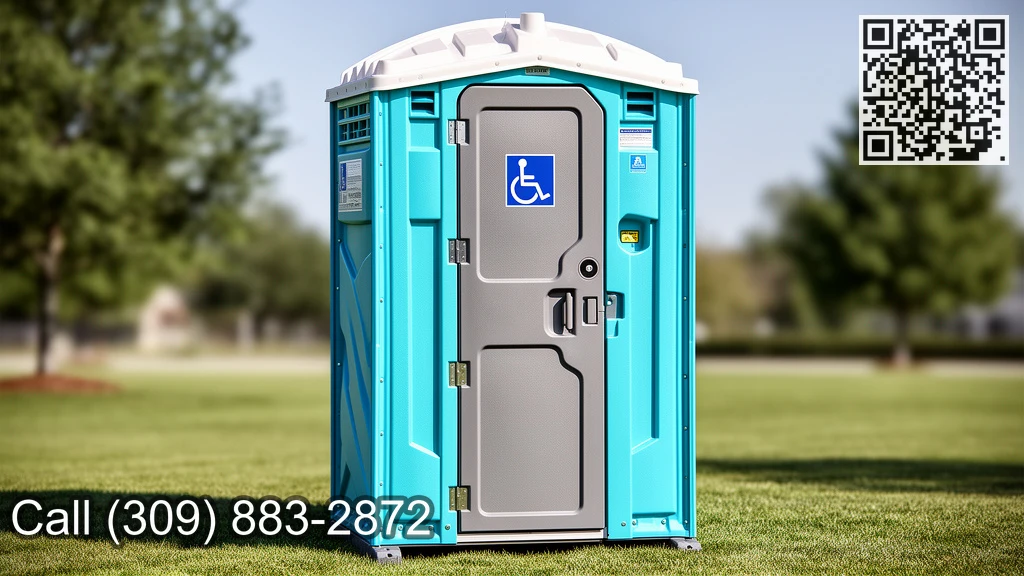
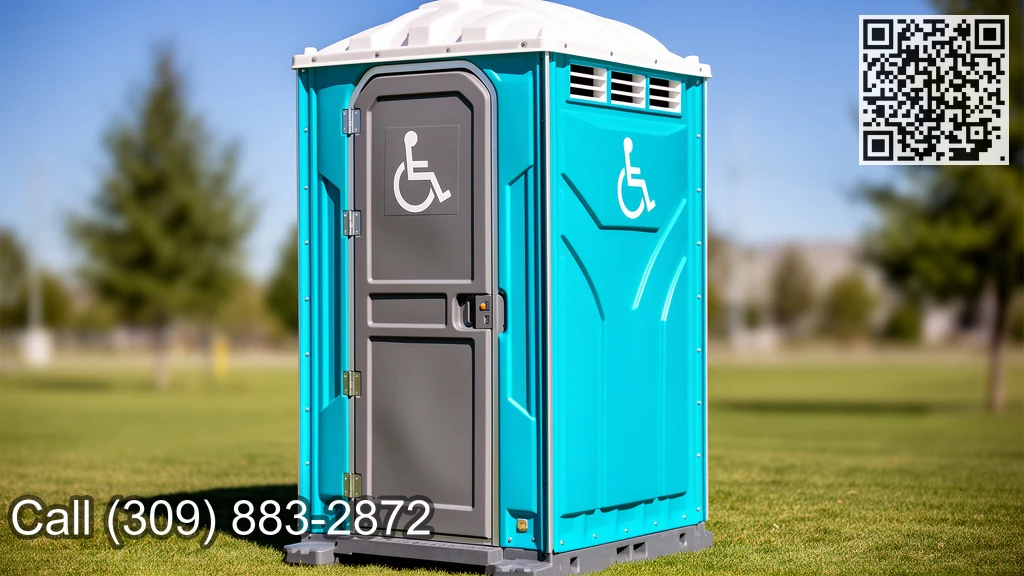
Accessible mobile systems have to show the International Icon of Ease Of Access. That demand serves a sensible function. People need to be able to recognize the ideal system without presuming or requesting for aid. At hectic sites, clear identification lowers confusion and minimize the awkward moment when a person reaches a basic unit and only then realizes it is unusable for them.
Still, identification is only valuable when it points to something really accessible. A significant unit concealed behind an additional row, blocked by storage space, or approached by a hard to reach course develops stress fast. In a way, poor positioning makes the visible sign feel worse since it increases assumptions the site does not meet.
Good site groups understand that ada certified obtainable mobile restrooms are both a purchase issue and a procedures concern. The device requires the best attributes. The website needs the appropriate configuration. Those are separate responsibilities that need to satisfy in the same place.
The within the system still matters
Because this guide concentrates on entrances and landings, it is alluring to leave indoor demands to the vendor. That is usually suitable, yet you still require adequate understanding to ask the best inquiries. The verified government framework states that mobile accessible units have to fulfill applicable toilet-room technical demands, including component clearances, turning area, door navigating clearances, and appropriate grab-bar and water-closet clearance rules.
Those indoor information attach directly to the entrance. Door maneuvering clearance is not simply a within concern. It connects to how an individual opens and goes through the entrance. Turning area influences what happens when they get in. If the door area is cramped outside, the trouble might start prior to the individual can benefit from the available interior.
This is where terms often creates confusion. Some vendors will promote an ada mobile restroom, others an ada mobile toilet, and others ada-compliant portable restrooms The phrasing can differ. What issues is whether the system, and the final installment, satisfy the ADA requirements that apply.
Temporary occasions are not exempt
One of one of the most consistent myths in this area is that short-term arrangements get a pass. They do not. The Accessibility Board has explained that the cluster requirement uses even at short-lived events. That matters for performances, celebrations, races, seasonal attractions, college functions, and community events where coordinators might be balancing budget plans, compressed timelines, and uncertain attendance.
I comprehend why this misconception makes it through. Momentary occasions include a lot temporary facilities that people start considering whatever as versatile. However availability is not a decorative upgrade you include if there is space left in the budget. For visitors that require it, it is standard access.
The larger conformity climate additionally matters. Access enforcement and expectations have widened throughout fields. Also current advice in various other ADA locations reveals that compliance activity continues to be active and advancing. While that details support addresses digital accessibility for state and city governments, the broader lesson is simple: companies must not presume availability duties are fading right into the background. They are significantly alive.
One significant exception, and why people abuse it
There is an important subtlety in the older 1991 ADA style requirements: portable bathroom devices at building websites made use of solely by construction workers were exempt from the portable-toilet availability scoping requirement referenced there. That exception is real, yet individuals often stretch it as well far.
It does not produce a covering exception for every single mobile bathroom at every construction-related location. It is linked to a details context. For basic portable toilet leasings, the accessible-unit requirement continues to be. If a site serves the general public, site visitors, consumers, or others outside that narrow exclusive-use scenario, you need to not think the exemption applies.
I mention this because it shows up usually in conversations about ada mobile toilet rental preparation. A person listens to that construction sites are excluded, then begins applying that concept to sales offices, mixed-use tasks, public-facing advancements, or event areas beside construction task. That is risky thinking. When the realities are mixed, the safest training course is to go back and assess the real use of the devices as opposed to relying upon a half-remembered exception.
Common placement issues I see in the field
Most access failings with portable washrooms are not dramatic. They are ordinary oversights that accumulate. A crew positions the device where the vehicle has simplest accessibility, not where individuals have best gain access to. One more vendor arrives later and puts barriers also close to the door. The ground looks firm in the early morning and transforms soft by afternoon. None of these decisions seem substantial in isolation. Together, they can make the entryway unusable.
Here are the concerns worth checking before you approve the arrangement:
- The accessible unit beings in a collection yet is harder to get to than the standard units.
- The course goes across unsteady or uneven ground that becomes worse with website traffic or weather.
- The space at the entryway is constrained by nearby devices, fencing, bins, or staging gear.
- The touchdown area does not support risk-free door procedure and entry.
- The unit is labeled accessible, but the website format successfully blocks independent use.
That short review captures an unexpected variety of failings. It also https://brooksemwt589.iamarrows.com/ada-portable-restroom-guidelines-for-short-term-events-explained pushes the conversation beyond "Did we order the right thing?" to "Can a person use it without support?"
How I would come close to a rental decision
When I aid analyze a portable hygiene strategy, I begin with the website, not the directory. The rental order issues, but the surface and website traffic pattern make a decision whether the order works. If you recognize the accessible route will be hard, address that before the units get here. If your website has numerous collections, represent the 5 percent guideline in each collection. If you expect groups, do not tuck the accessible device right into the leftover space at the edge.
I additionally urge groups to determine that possesses the last walkthrough. That appears ordinary, but it protects against the traditional handoff issue where the rental business assumes the event group will certainly handle placement details, and the occasion group thinks the vendor has already managed compliance. Somebody ought to literally evaluate the course, entryway, and touchdown after installation and before the website opens.
This is specifically helpful for any person organizing ada compliant obtainable portable restrooms for the first time. The discovering contour is not about memorizing every technical stipulation. It has to do with recognizing that access is a positioning problem as much as a product issue.
Better concerns to ask your supplier and website team
You do not need to be an ADA professional to ask useful questions. In fact, plain language usually gets better results than lingo. Ask whether the device given is an ada certified mobile toilet or ada-compliant portable toilet meant to satisfy accessible toilet requirements. Ask exactly how the entry and touchdown will be established. Ask who verifies the easily accessible route after positioning. Ask exactly how the collection matter was determined if the website has several toilet groups.
What you are actually doing is making sure nobody treats ease of access as a box examined at send off. Good vendors normally appreciate this since it surface areas site restraints early. A careful carrier recognizes that also an appropriate device can be undermined by a poor setup.
I would certainly additionally take note of whether the responses stay focused on the real criteria. If the action is primarily "this is our mobility device system, we use it almost everywhere," that is inadequate on its own. You want self-confidence that the installation will certainly support the course, entry, and navigating requires the ADA framework contemplates.
Accessibility is experienced at ground level
There is a human side to this that policies alone do not catch. Needing an obtainable toilet is not unusual, and it is not rare. It impacts older grownups, people with momentary injuries, wheelchair individuals, people with balance limitations, and several others. For some, the distinction in between a useful and unusable arrangement is the difference in between remaining at an occasion and going home early. It can identify whether an employee feels fit, whether a relative can go to comfortably, or whether a public event in fact welcomes the public it states it serves.
That is why the entrance and touchdown issue so much. They are the factor where dignity is either supported or silently undermined. A person should not need to hunt for assistance, await somebody to hold a door, or danger obtaining stuck due to the fact that the "easily accessible" bathroom was positioned as an afterthought.
When an ada portable toilet is intended well, the experience is uneventful in the best possible method. The course makes good sense. The significant unit is where it should be. The entrance is obtainable. The touchdown works. The door can be run. The inside sustains usage. Absolutely nothing concerning that is flashy, but it is skilled and respectful.
And that, greater than any type of tag on a quote sheet, is what actual availability looks like.
 Ask ChatGPT
 Ask Grok
 Ask Perplexity
 Ask Claude
 Ask Google AI
 Ask You