Entry · Ref VSYAG_1U
ADA Compliant Portable Commode Policy for Public and Temporary Use
- Posted
- 2026-09-27
- Last amended
- 2026-09-27
- Account
- @garrettshxs110
Portable washrooms are very easy to deal with like a last-minute line item. Someone orders sufficient devices for the crowd, picks a delivery place, and carries on to power, fence, or staffing. Accessibility usually gets interest just after an issue, a walk-through, or a negative moment when a guest shows up and understands the bathroom configuration does not work for them.
That is exactly why this topic is entitled to care.
An ada certified mobile toilet is not simply a nicer or bigger device. It is part of fundamental gain access to. At a public occasion, a street fair, a park celebration, a short-term workspace available to the general public, or any type of various other temporary configuration, washroom accessibility can identify whether a person takes part conveniently, struggles through the day, or leaves. For family members, caretakers, older adults, and mobility device individuals, washroom accessibility is not a detail. It shapes the entire experience.
The controling federal criterion in the United States is the 2010 ADA Criteria for Obtainable Design, as interpreted by the Division of Justice and the United State Access Board. That matters since many practical questions about ada certified mobile restrooms boil down to one basic concept: momentary does not suggest optional.
Temporary placement does not cancel accessibility
One of the most consistent misunderstandings in the area is the concept that mobile bathrooms rest outside the regular ease of access policies because they are not permanent structures. In technique, that is not how the conventional works.
If you have a cluster of portable single-user toilet systems, a minimum of 5 percent of the units in each cluster must be accessible The Gain access to Board explains that this uses also at temporary occasions. That point catches people off-guard. They might think a weekend break celebration, seasonal destination, or one-day community event obtains a pass. It does not.
This is where preparation usually goes wrong. Coordinators focus on the complete variety of units and forget the truth that ease of access is measured within the cluster. If mobile toilets are spread out across a site in different groups, each group needs to be assessed keeping that 5 percent regulation in mind. A single obtainable system at one end of the residential or commercial property does not automatically resolve accessibility troubles for every single other bathroom bank.
That difference matters in genuine usage. I have seen event formats where the only ada mobile restroom was practically on site, yet the individual who needed it needed to take a trip much farther than every person else, over harsh ground, with crowded walkways. Theoretically, a person might have felt they inspected the box. On the ground, it was not equivalent gain access to in any type of meaningful sense.
https://telegra.ph/ADA-Certified-Portable-Toilets-Recognizing-Door-Handling-Clearances-09-27What makes a mobile unit accessible
People commonly make use of terms like ada obtainable mobile restroom, ada handicap easily accessible portable restroom, and ada mobile toilet interchangeably. In casual conversation, that prevails. In compliance terms, what matters is whether the system and the way it is installed satisfy the availability demands that apply.
An available portable commode system must do greater than exist. It needs to be recognizable, reachable, and usable.
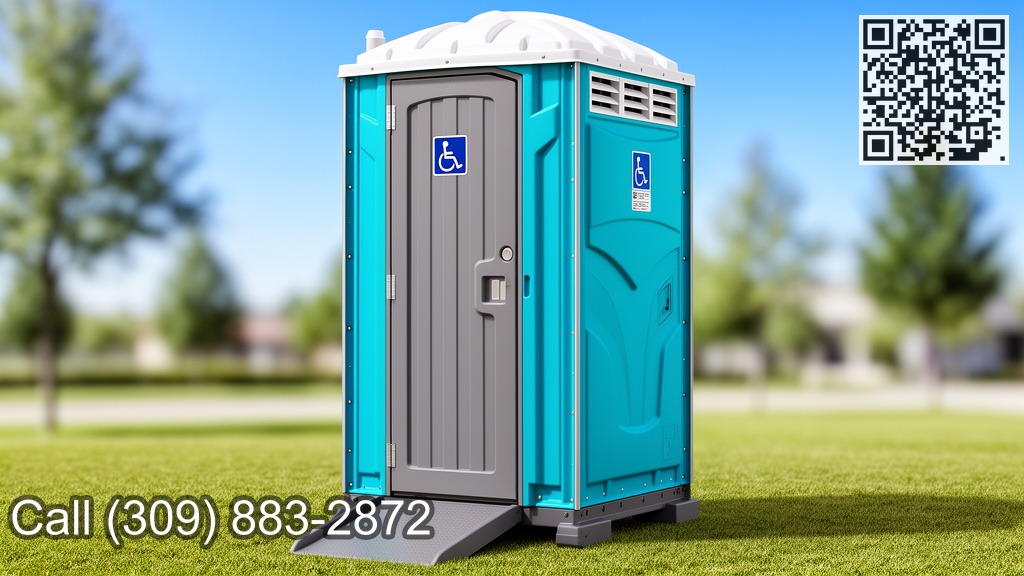
First, it has to be identified with the International Sign of Accessibility That seems evident, yet it is simple to miss when devices are supplied in bulk, wrapped in branding, or repositioned during configuration. Clear recognition aids people discover the best device without requesting for help or trying each door one by one.
Second, it must get on an accessible route and have an accessible entrance This is just one of the greatest practical failing factors. A supplier might provide a perfectly ideal ada-compliant portable toilet, but if it is put throughout soft ground, gravel ruts, mud, aesthetics, or irregular momentary outdoor decking without certified access, the installment can still stop working the user. Accessibility is not just concerning the covering of the restroom. It is additionally regarding the course to get there and the capacity to get in safely.
Third, if ramps or touchdowns are needed, those aspects have to meet the ADA technical requirements too. This is where final improvisation produces danger. A quick plywood service may feel helpful in the moment, yet accessibility standards are not satisfied by makeshift accessibility that is unpredictable, as well high, or does not have the required touchdown problems. If a ramp is essential, it needs to be done right.
Inside the unit, the demands connect back to toilet-room technical requirements. The validated federal guidance points to a number of specific locations: fixture clearances, transforming area, door maneuvering clearances, and applicable grab-bar and water-closet clearance rules That is the real core of ada portable toilet requirements The system has to permit an individual to enter, maneuver, placement themselves, and use the component with the features and clearances the basic requires.
Why size alone is not enough
Many buyers assume the larger device is instantly certified. Often a larger footprint belongs to the solution, but dimension on its own does not show anything.
A roomy interior that lacks the right clearances is still an issue. A wide-looking doorway that does not give correct handling conditions can still be unusable. A grab bar set up regardless the required configuration does not become compliant because it looks sturdy. This is why the phrase ada certified available mobile restrooms ought to never ever be treated as an advertising and marketing adjective alone.
The far better method is to think in layers. The unit itself have to fulfill the needed toilet-room technical requirements. The entrance should come. The path needs to be accessible. The unit needs to be appropriately marked. Every one of those pieces interact. If one breaks down, the user feels it immediately.
That is particularly true at jampacked public occasions, where exhaustion, weather condition, and time pressure magnify every small challenge. A few extra inches of mud or an inadequately put threshold might not sign up to the arrangement team. To a visitor making use of a wheelchair or walker, it can make the restroom effectively unavailable.
The 5 percent policy, and what people commonly miss
The 5 percent need is simple in phrasing, yet unsafe in practice.
If you have a collection of portable single-user toilet units, a minimum of 5 percent of the units because cluster have to be accessible. This is not mounted as a wide site standard in the validated guidance provided right here. It is linked to each cluster For coordinators, that indicates checking by area, not simply by event-wide total.
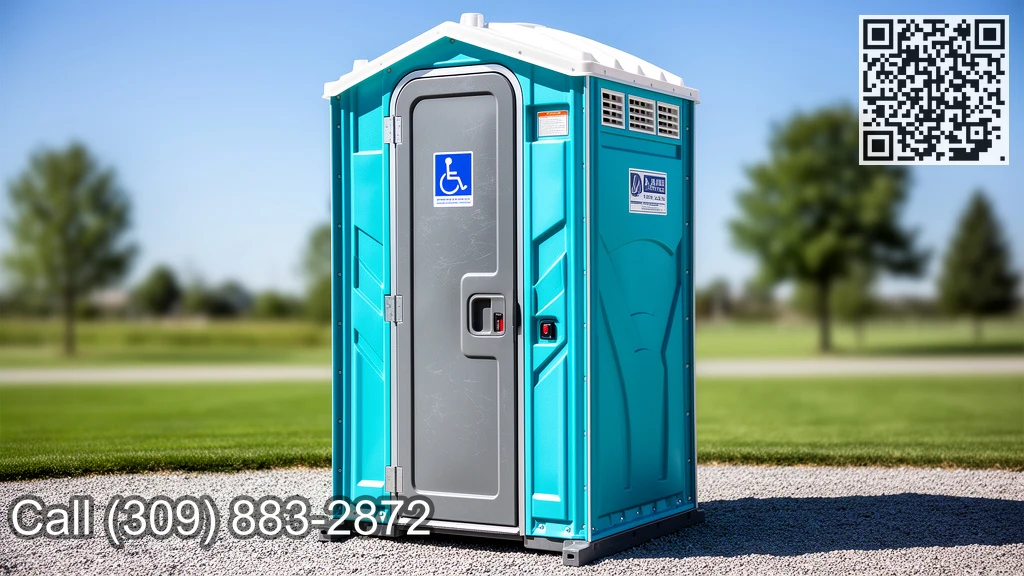
A common blunder is under-ordering available devices since somebody rounds down also strongly or assumes one obtainable device someplace on site suffices. Another error is moving devices after distribution for group flow or truck gain access to and inadvertently leaving one cluster without proper accessible coverage.
When individuals ask me just how to stay clear of that shuffle, I usually suggest a fast pre-delivery check developed around the actual map as opposed to the order. Theoretically, everything can look compliant. On the ground, the cluster near the stage may be fine while the collection by the food court or vehicle parking side is not.
Here is a short field-check that assists capture troubles before entrances open:
- Count units by each separate collection, not just by overall site inventory.
- Confirm the easily accessible systems are marked with the International Icon of Accessibility.
- Walk the course to every obtainable unit as a user would certainly, including any ramp or landing.
- Check that the entry and indoor arrangement sustain the called for handling and clearances.
- Re-check after any type of relocation, secure fencing modification, or weather-related website adjustment.
That type of evaluation seems standard, however it protects against most of one of the most unpleasant failures. Access issues with portable toilets are usually not strange. They are generally the outcome of presumptions made also quickly.
Public occasions versus construction-only use
This location triggers a great deal of complication due to the fact that individuals hear about an exemption and apply it as well broadly.
The ADA criteria background consists of a distinction including portable bathroom devices at construction sites used solely by construction personnel The validated context notes that these were exempt from the portable-toilet availability scoping demand in the pointed out 1991 standard. That slim factor matters, but just because slim context.
It does not suggest that mobile bathroom services generally are exempt. For general mobile commode rentals, the accessible-unit demand stays. If the units are offering public or temporary usage outside that restricted construction-personnel-only situation, you ought to not presume the exception applies.
This is where language matters. I have seen conversations drift into shorthand like, "It's momentary," or, "It's generally a jobsite configuration." Those phrases can hide the genuine concern, which is that the washrooms are for and what standards control that setting. If the arrangement is for the public, for occasion guests, or for broader use beyond building and construction personnel exclusively, availability requires to be dealt with as part of the core scope.
Placement is where compliance usually succeeds or fails
The leased unit may be completely referred to as an ada certified mobile toilet in the contract, but placement can undo that in minutes.
Portable bathroom suppliers and site supervisors typically work under pressure. Trucks need transforming room. Grounds teams intend to safeguard lawn. Organizers desire toilets near web traffic but not as well visible. Safety might desire them behind barriers. Each of those decisions affects accessibility.
The expression ada mobile commode rental ought to motivate 2 discussions, not one. The very first has to do with the ideal devices. The 2nd is about the right location and technique. If you only have the first conversation, you are leaving one of the most usual field issue unresolved.
An ada accessible portable restroom positioned on a path that ends up being sloppy after rain can stop being meaningfully obtainable. An unit positioned on a slope might create genuine trouble at the entrance. A system put behind solution automobiles may technically exist yet be tough to find or approach. Also signage can matter in a hectic venue, especially when individuals are browsing sound, crowds, or time pressure.
Good placement usually really feels uneventful. The course is steady. The easily accessible device is simple to area. The door area is not pinched by obstacles, trash cans, or crowd-control fence. An individual can enter, transform, and utilize the bathroom without needing personnel intervention. That must be the typical individuals work toward, not simply minimum paper compliance.
Technical compliance is not just a box for inspectors
The ADA technical demands for commode spaces are sometimes treated as abstract design rules. They are not abstract to the people that rely on them.
Turning room impacts whether a mobility device user can rearrange inside the unit. Door steering clearances affect whether an individual can open up and shut the door without getting entraped in an awkward angle. Grab-bar and water-closet clearance guidelines influence transfers, security, and safety. Fixture clearances impact whether the bathroom can be utilized independently at all.
This is why ada-compliant mobile restrooms need to never be marketed or purchased exclusively on the basis of "additional area." The point of the criterion is functionality, not just square footage. A compliant arrangement is attempting to make a normal task possible with dignity, safety and security, and as much freedom as possible.
For operators, that point of view changes just how the job feels. You stop thinking of accessibility as a separate special item and begin seeing it as the part of the toilet strategy that identifies whether every person can participate.
The language people utilize, and the language that matters legally
Clients often search phrases like ada certified portable toilets, ada-compliant mobile toilet, or ada mobile restroom because they are attempting to address a functional problem quickly. That is reasonable. Look language is messy. Contracts can be unclear. Sales terms vary by area and by vendor.
Still, from a conformity perspective, the crucial inquiries correspond. Does the setup give the needed variety of accessible systems for each and every cluster? Are those units identified with the access sign? Is there an easily accessible course and entrance? Do any ramps and touchdowns conform? Does the unit fulfill the appropriate toilet-room technological requirements?
Those inquiries cut through branding and shorthand. They likewise assist when contrasting suppliers. One firm might market an ada handicap obtainable mobile restroom while one more uses the tag ada compliant obtainable portable restrooms The phrasing alone does not answer whether the provided arrangement will satisfy the standard in your specific layout.
That is why seasoned planners request clarity on both the unit and the installation problems. A good service conversation is specific. Where will the units sit? How will individuals reach them? Will any kind of short-term ramp or touchdown be needed? Will the symbol be visible after branding or placement? Will the available systems remain in the collection they were intended to serve?
Temporary does not mean low-risk
Portable toilet access troubles can really feel little to organizers till the first individual is affected. After that the trouble gets extremely actual, extremely quickly.
Someone misses out on component of an occasion due to the fact that the only functional restroom is as well far. A parent assisting an adult kid fights with course conditions. A mobility device user gets to a community feature and has to ask personnel to relocate obstacles. None of these minutes are significant in the legal sense initially look, yet they are deeply substantial in human terms. They signify who was considered in the planning procedure and who was not.
The wider conformity climate likewise matters. Accessibility enforcement is not reducing. The verified context right here notes recurring ADA conformity activity throughout industries, including current federal assistance around web and mobile ease of access target dates for state and local government entities. That support is not regarding portable bathrooms directly, but it shows a larger truth: availability is being dealt with as an energetic compliance duty, not an inactive concern individuals can safely ignore.
For companies that take care of occasions, parks, civil services, or short-term facilities, that must be enough factor to tighten up treatments now rather than wait for a complaint.
What careful organizers do differently
The best-run websites do not treat the obtainable bathroom as an add-on. They build it right into the initial version of the plan.
They matter clusters early. They reserve enough easily accessible devices prior to supply obtains tight. They stroll the site with course conditions in mind. They consider climate, crowding, and the possibility that a course that looks penalty at 8 a.m. May not be great by mid-afternoon. They collaborate with suppliers so the ada compliant mobile restrooms are provided where they are in fact needed, not parked where the vehicle vehicle driver had the easiest exit.
They likewise revisit the setup after installment. Mobile commodes are relocated, nudged, and re-lined more often than individuals understand. A certified positioning at delivery can come to be an endangered positioning by opening time if other website components change around it.
If there is one sensible lesson that comes up repeatedly, it is this: availability is seldom shed due to the fact that no one got the appropriate system. It is shed since no one adhered to the unit all the way via to real use.
A good criterion for decision-making
When you are unclear whether your bathroom plan is truly accessible, one question puncture the sound: can a person discover the accessible system, reach it, enter it, maneuver within, and use it with the functions and clearances required by the ADA requirements, without special help and without a worse experience than every person else?
If the sincere answer is no, the configuration requires work.
That is the heart of ada mobile bathroom requirements for public and temporary usage. The requirements are technical, however their purpose is human. They exist to ensure that a mobile washroom, also in a short-lived setup, does not become an obstacle that leaves out someone from work, area life, or a straightforward day out.
For any person arranging an ada portable commode rental, that is the best way of thinking to keep from the first website illustration to the last placement. The regulations are not there to complicate your event. They exist to ensure your event, solution, or short-term facility is open in technique, not simply in theory.
 Ask ChatGPT
 Ask Grok
 Ask Perplexity
 Ask Claude
 Ask Google AI
 Ask You